What is So Special About Osaka Aquarium?
Osaka Aquarium Kaiyukan is special because its 34-meter central tank holds two whale sharks and the whole building is laid out as one descent from a Japanese forest to the deep sea. This page answers what is so special about Osaka Aquarium, from the Pacific Ocean tank and the route to its research record, what you will not see and whether it is worth seeing.
Quick answer
Osaka Aquarium is special because one 34-meter tank holding two whale sharks sits at the center of a building designed as a single descent from a Japanese mountain stream to the deep sea. It opened in 1990 as the largest public aquarium in the world and had welcomed 85 million visitors by 2024.
Key takeaways
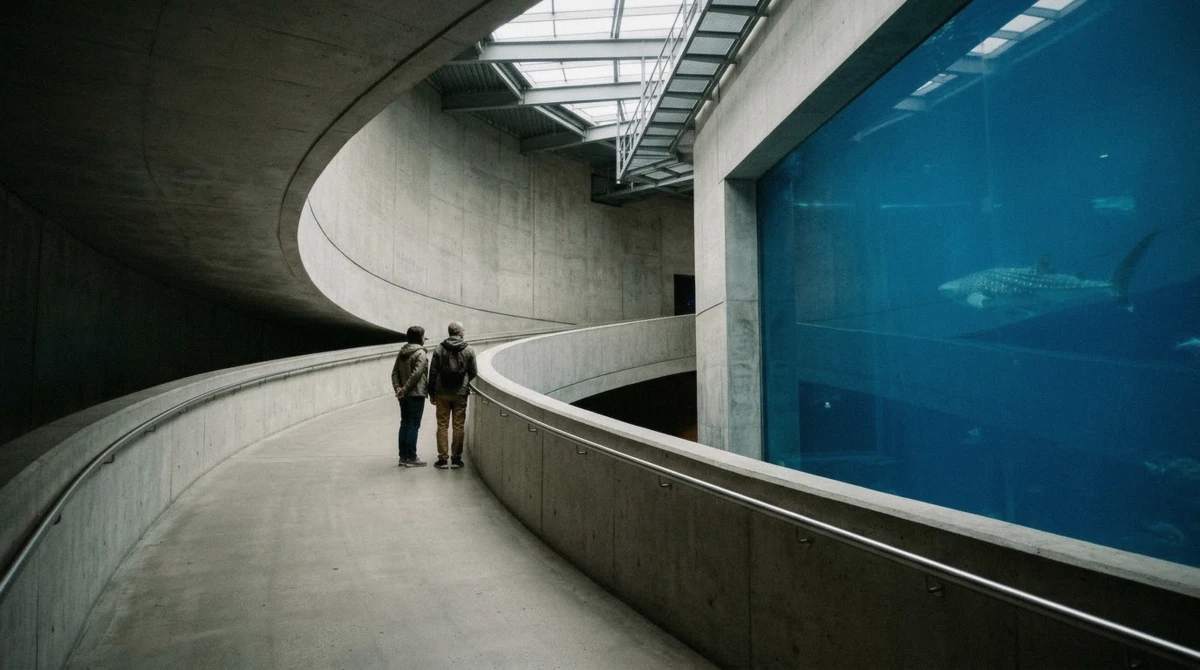
- The Pacific Ocean tank is 34 meters long and 9 meters deep, and you pass it on several floors at different depths
- The route is the exhibit: it runs from Japan Forest across the Pacific rim to the deep sea, and skipping ahead to the tank loses the idea
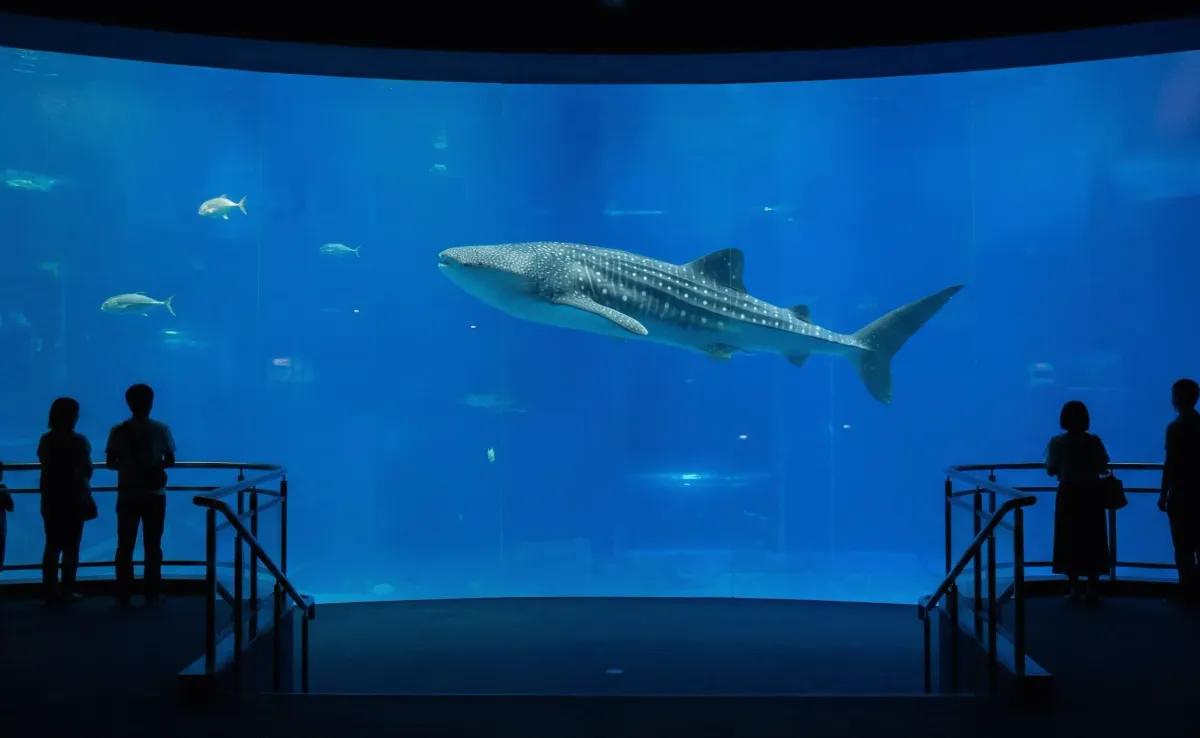
- Two whale sharks, Kai and Yuu, live there permanently, so seeing them is not a matter of luck
- The aquarium has kept or bred 85 species of sharks, rays and ghost sharks, a research record few aquariums match
- A skip-the-line ticket with a feeding guide costs $35, while the official adult gate price runs ¥2,700 to ¥3,500 (about $17 to $22)
Which Osaka Aquarium Tickets and Tours Show You the Best of It?
These three start with entry to the aquarium itself, then add the ferry across the bay and a guided day that places the aquarium among Osaka's other sights.
 from $35
Skip the Queue: Osaka Aquarium Entry Ticket + Digital Feeding-Time Guide
Pre-booked entry to Osaka Aquarium with QR-code scan directly at the entrance — no ticket-counter queues. Includes a complimentary digital Ocean Life guide sent after booking so you…
- Skip the ticket-counter queues — scan QR code straight at the entrance
- See the whale sharks in the massive 9-metre-deep Pacific Ocean tank
- Free digital guide: animal feeding schedule + best viewing spots
- Free cancellation up to 24 hours before your visit
 from $7.89
Osaka Aquarium ↔ Universal Studios Ferry — Captain Line Shuttle
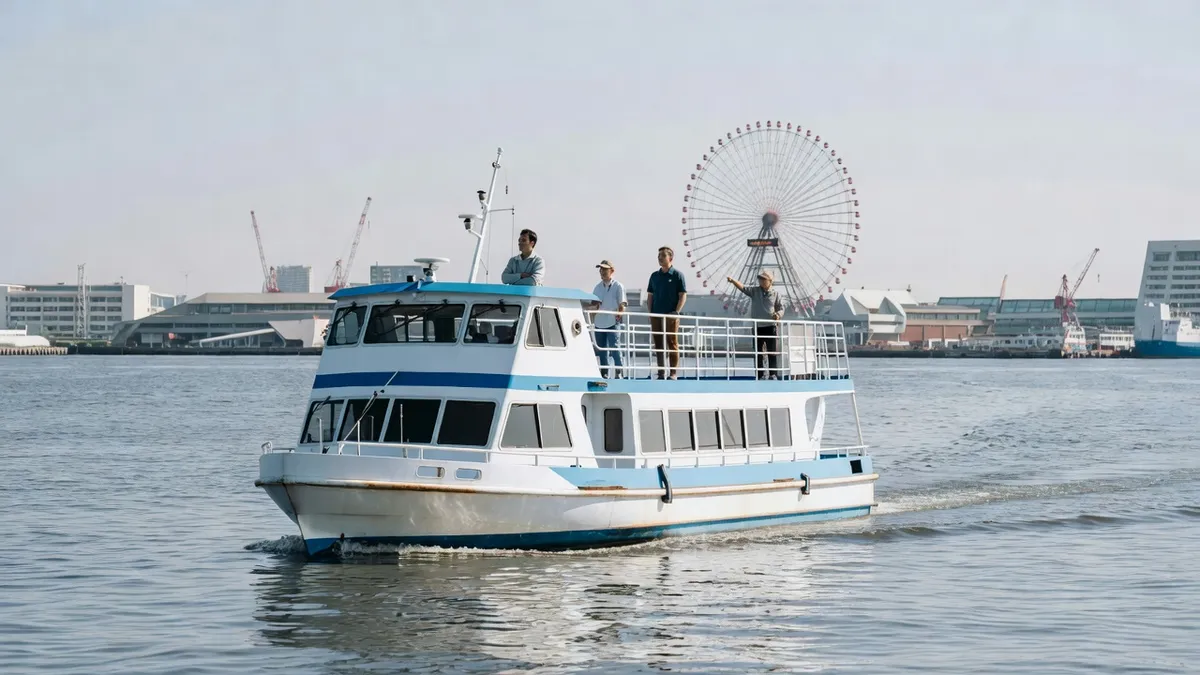
The Captain Line shuttle ferry links Osaka Aquarium and Universal Studios Japan across Osaka Bay in about 10 minutes — faster and more scenic than the train. Relax…
- 10-minute ferry hop between Osaka Aquarium and Universal Studios Japan
- Skip the train — direct across Osaka Bay with scenic waterfront views
- Air-conditioned cabin downstairs or open-air upper deck
- One-way or round-trip tickets — instant confirmation
 from $170
Year-round
Osaka Personalized Private Tour with a Local Guide
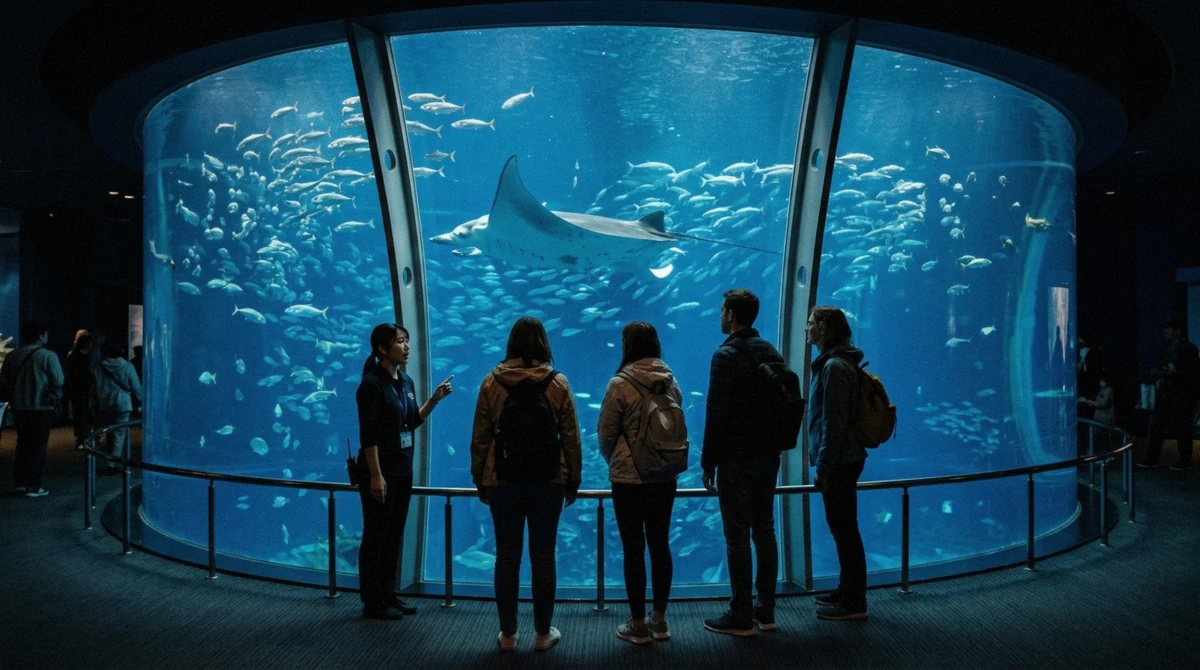
A private, fully personalized day with a local Osaka guide that loops the aquarium in with the city's biggest sights: Osaka Castle, Dotonbori, Kuromon Market and more. The…
Runs all year, and the guide reshapes the route around your group.
- Private and fully personalized, just your group and a local guide
- Visits Osaka Aquarium plus Osaka Castle, Dotonbori and Kuromon Market
- Hotel pickup included and the guide plans the whole route
- Free cancellation up to 24 hours before, reserve now and pay later
What Makes Osaka Aquarium Special?
Osaka Aquarium Kaiyukan is special for three reasons that work together: its scale, its whale sharks and its route. It opened in 1990 as the largest public aquarium in the world, it is built around a single 34-meter tank, and the whole building tells one story of the Pacific. The aquarium calls the idea the Ring of Fire and the Ring of Life, the volcano belt around the Pacific and the life that lives along it.
| What stands out | The figure | Why it matters to a visitor |
|---|---|---|
| Opened | 1990, then the largest public aquarium in the world | It set the template for big walk-through aquariums in Japan |
| Visitors | 5.6 million in the first year, 85 million in total by 2024 | Locals and travellers keep coming 35 years on |
| Repeat visitors | About 60 percent | Locals come back, which says the exhibits change and hold up |
| Tanks | 27 tanks, 16 main exhibits, 10,941 tons of water | A full visit takes 2 to 3 hours, not 45 minutes |
| Whale sharks | Two, in the central tank | The headline animal is always on show |
For first-timers, the question is rarely whether the aquarium is big. It is whether the layout feels different from other aquariums, and here it does, because every floor frames the same central tank from a new depth.
Source: Wikipedia, Osaka Aquarium Kaiyukan, Osaka Aquarium Kaiyukan.

The Kaiyukan building at Tempozan, where the escalator to the 8th floor starts the descent. Photo: Dick Thomas Johnson, CC BY 2.0, via Wikimedia Commons
What Is Special About the Pacific Ocean Tank?
The Pacific Ocean tank is special because it is large enough to hold animals that most aquariums cannot keep together, including two whale sharks, reef manta rays and scalloped hammerhead sharks. It is 34 meters long, 9 meters deep and holds about 5,400 tons of water.
| Detail | Figure |
|---|---|
| Length | 34 meters |
| Depth | 9 meters |
| Water | About 5,400 tons |
| Whale sharks | Kai (male, 5.76 meters) and Yuu (female, 6.2 meters), measured on 30 October 2026 |
| Other residents | Indian mackerel, Pacific bluefin tuna, reef manta rays, scalloped hammerhead sharks |
Osaka was the second aquarium in the world, after the one at Okinawa, to keep whale sharks. It kept a manta ray in 1994 and an ocean sunfish in 1995. The sunfish is reported to be even more popular with visitors than the whale sharks, thanks to its odd, flat shape.
The whale shark guide lists what else shares the tank and the usual feeding times.
Source: Kaiyukan, whale shark measurements, Wikipedia, Osaka Aquarium Kaiyukan.
Why Does the Route Matter So Much at Osaka Aquarium?
The route matters because the building is designed as a journey, and the order of the tanks is part of what you pay for. You ride an escalator to the 8th floor, enter Japan Forest, and then spiral down. The official concept starts in a Japanese mountain stream, crosses the Pacific and ends on the sea floor at Japan Deep, where sunlight does not reach below 200 meters.
| Stage | Zones in order | What you see |
|---|---|---|
| Arrival | Aqua Gate, Japan Forest | A tunnel tank, then otters, salamanders and river animals |
| North and east Pacific | Aleutian Islands, Monterey Bay | Cold-water animals and California sea lions |
| Tropics and the south | Gulf of Panama, Ecuador Rainforest, Antarctica, Tasman Sea, Great Barrier Reef | Capybaras, penguins and coral reef fish |
| The center | Pacific Ocean tank | Whale sharks, manta rays and schooling fish |
| Coast and deep | Seto Inland Sea, Coast of Chile, Cook Strait, Japan Deep | Octopus, turtles and giant spider crabs |
| Finale | Jellyfish, Arctic Region, Falkland Islands | Drifting jellyfish, ringed seals and rockhopper penguins |
This is why heading straight to the whale sharks is the wrong plan. You see the same tank again on the way down, so the best moments come when you slow down at each level rather than rushing. Also, the music changes with the time of day, which adds to the evening visit covered in the best time to visit guide.
Source: Osaka Aquarium Kaiyukan, exhibition, Wikipedia, Osaka Aquarium Kaiyukan.
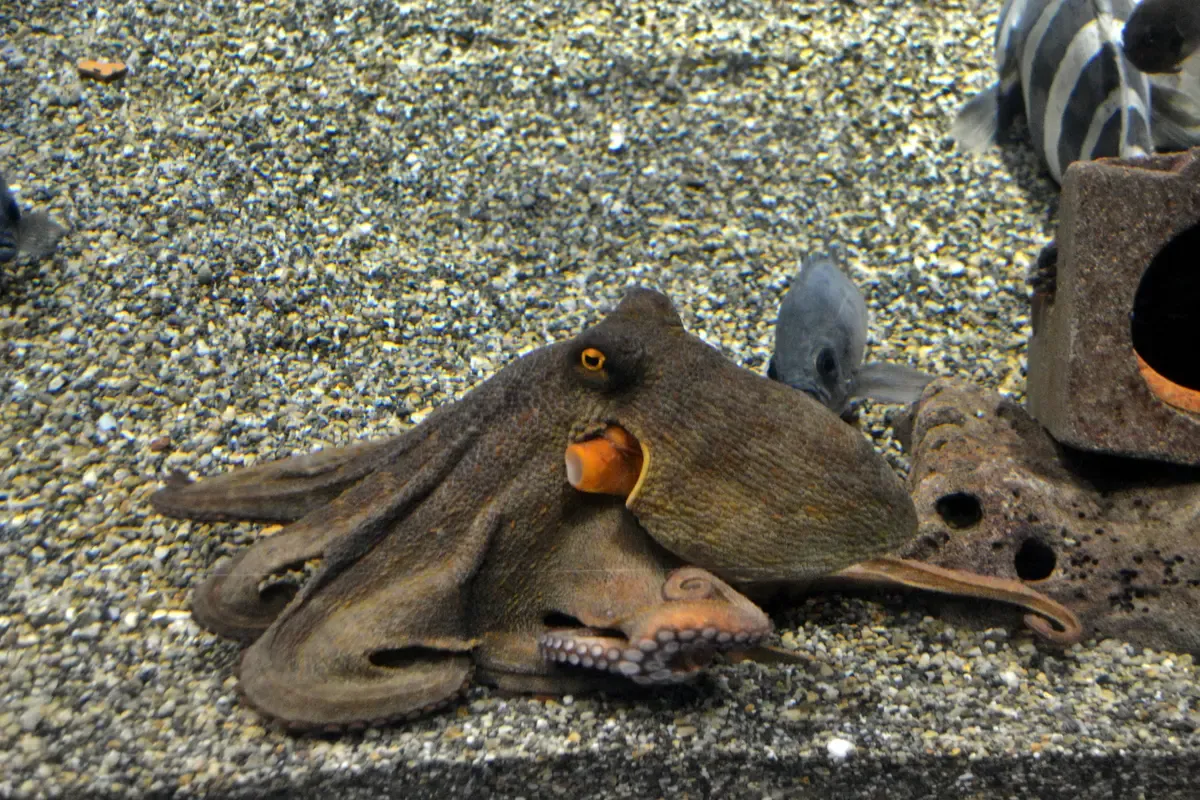
A common octopus at Osaka Aquarium Kaiyukan. Photo: Kingfisher, CC BY-SA 3.0, via Wikimedia Commons
Is Osaka Aquarium One of the Best in the World?
Osaka Aquarium is one of the best-known aquariums in the world, and the reasons are scale, whale sharks and research rather than a single record. It was the world's largest when it opened and still draws 2.5 million or more visitors a year. Its research record is the least known part, and the table shows where it leads.
| Milestone | What happened |
|---|---|
| Whale sharks | Second aquarium in the world to keep them, after Okinawa |
| Manta ray | Kept in captivity in 1994, the second in the world at the time |
| Sharks and rays | 47 shark, 37 ray and 1 ghost shark species kept or bred by 2016, 85 species in total |
| Giant devil ray | In 2022, the first in the world conceived in captivity |
| Whale shark tagging | Tagged whale sharks have travelled to the Philippines and dived to 1,500 meters |
Whether it is the best for you depends on what you want. If you are comparing several, our guides on the most famous aquarium in Japan and which aquariums have whale sharks put it next to the others.
Source: Wikipedia, Osaka Aquarium Kaiyukan.
Are There Interactive Exhibits at Osaka Aquarium?
Yes, the interactive area opened in 2013 and holds three zones where you get closer to the animals. The Arctic zone has ringed seals and the Falkland Islands zone has southern rockhopper penguins. The Maldives zone is the only place in the building where you can touch animals, small brownbanded bamboo sharks, coral catsharks and stingrays.
- Arctic zone: ringed seals, fed twice a day at the times on the official feeding-time page
- Falkland Islands zone: rockhopper penguins, smaller than the Antarctica penguins
- Maldives zone: touch pool, hands washed before and after
- Everything else in the building is viewing only
Families with young children should read the kids and rainy day guide for stroller routes and how long children last inside, and plan 3 to 4 hours.
What Will You Not See at Osaka Aquarium?
You will not see any animal shows, and one zone is closed. There are no dolphin or sea lion performances anywhere in the building, and every animal behaves as it would anyway. The official exhibit list marks the Aleutian Islands tank as closed for renewal work, and the tufted puffins that lived there went off display on 10 May 2026 and are moving to Aqua World Oarai.
If one animal is your reason to go, check the exhibit list first.
- No animal shows or trainer performances
- No orcas and no polar bears
- Check the open tanks on the day if a particular animal is your reason to go
- Feeding rounds are on the official feeding-time page and the board at the entrance, and they can change without notice
Plenty remains. The Japan Forest has about 200 plant species, and the whale sharks, jellyfish and penguins are all on the standard route.
Source: Osaka Aquarium Kaiyukan, exhibition, Kaiyukan, tufted puffin notice.
How Much Time Do You Need to See What Makes It Special?
You need 2 to 3 hours to see the parts that make Osaka Aquarium special, and about 90 minutes if you walk the full route at a brisk pace. The time is not spread evenly, because the upper floors move fast and the middle stretch around the Pacific Ocean tank is where almost everyone slows down.
| Part of the visit | Time to allow | What to do there |
|---|---|---|
| Aqua Gate and Japan Forest | 10 to 15 minutes | Look up in the tunnel tank, then find the otters and salamanders |
| Cold and warm Pacific zones | 30 to 40 minutes | Time the sea lions and penguins to a feeding round |
| Pacific Ocean tank, repeated | 30 to 45 minutes | Stop at each level, since each window shows the sharks at a new depth |
| Coast, deep sea and jellyfish | 30 minutes | Spider crabs, octopus and the slow jellyfish tanks |
| Touch pool and gift shop | 15 to 30 minutes | Wash hands before and after, then browse the shop at the exit |
These allowances add up to the 2 to 3 hours that most visitors spend, and children add up to an hour at the penguins and the touch pool. The how long it takes guide explains the timing in full.
Is Osaka Aquarium Special After Dark?
Yes, the evening gives the same route a different mood. From 17:00 the lighting and music change, which the aquarium calls Night Kaiyukan, and the day-trip crowd has mostly left. The usual evening session runs 17:00 to 20:00 with last entry at 19:00, though the aquarium shifts these times by season.
- The dim light suits the jellyfish and the central tank
- Fast whale shark photos are harder in the low light
- Last entry at 19:00 leaves about an hour, enough for a brisk walk but not the full visit
- Enter around 17:00 for a full 2 hours before closing
The music is part of the design. It follows the time of day and comes from one album, Acoustic Cafe Underwater Walk, so the soundtrack is part of why the building feels like a single piece rather than a row of tanks.
Source: Osaka Aquarium Kaiyukan, Wikipedia, Osaka Aquarium Kaiyukan.
Is the Osaka Aquarium Worth Seeing?
Yes, for most visitors, and the reasons are above: the tank, the whale sharks and the route. It works best if you plan 2 to 3 hours, go on a weekday morning or after 17:00, and walk the route in order. Adult admission is ¥2,700 to ¥3,500 (about $17 to $22) depending on the date, and children aged 7 to 15 pay ¥1,400 (about $8.80).
- Go if you like big tanks, sharks, and a route with a story
- Skip it if you have seen it before and no new exhibit draws you
- Pair it with the Giant Ferris Wheel and the Osaka Bay area for a half day
- See Osaka Aquarium tickets for the date-based price bands
Booking with a pre-arranged entry saves the counter queue on a busy date, and the Captain Line ferry links the aquarium with Universal Studios Japan in about 10 minutes. If you are building a longer Osaka trip, how many days in Osaka shows where it fits. Tickets and tours are on OsakaAquarium.com.
Frequently Asked Questions
What makes Osaka Aquarium unique?
A 34-meter central tank with two whale sharks, and a route that runs from a Japanese mountain stream down to the deep sea. It opened in 1990 as the largest public aquarium in the world.
How big is the Pacific Ocean tank at Osaka Aquarium?
34 meters long, 9 meters deep and about 5,400 tons of water. It is visible from several floors.
Is the Osaka Aquarium worth seeing?
Yes for most visitors. Plan 2 to 3 hours, and take the skip-the-line ticket on a busy date.
Is the Osaka Aquarium one of the best in the world?
It is one of the best known, with 85 million visitors by 2024 and 85 species of sharks and rays kept or bred.
Can you touch animals at Osaka Aquarium?
Only at the Maldives touch pool, where small sharks and stingrays can be touched under supervision.
Are there animal shows at Osaka Aquarium?
No. The animals are not performing, and feeding rounds are posted at the entrance.
How do you get from Osaka Aquarium to Universal Studios?
By the Captain Line ferry, about 10 minutes each way.