How Long Does Osaka Aquarium Take, and When Is the Best Time to Go?
Plan for 90 to 120 minutes to walk the full descending route through Osaka Aquarium Kaiyukan (海遊館) at a normal pace, 2.5 to 3 hours if you linger, and 3 to 4 hours if you are visiting with young children who want to stop at the penguins and the touch pool. The quietest window is weekday mornings right at opening, and again after 17:00 when the lighting dims to an evening mood. This guide covers exactly how long each type of visitor should budget, the real 2026 crowd calendar, and when in the day and week to go.
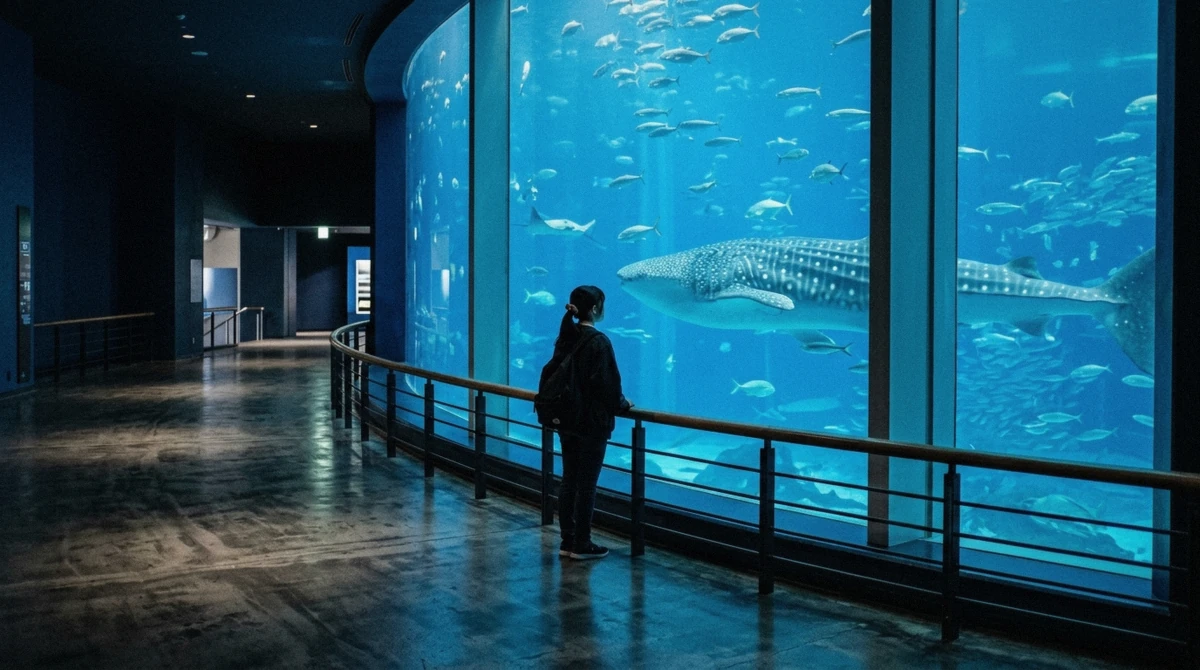
Quick answer
The full route through Osaka Aquarium takes 90 to 120 minutes at a normal pace, 2.5 to 3 hours if you take your time, and 3 to 4 hours for families who linger with young kids. The quietest time is a weekday morning at opening, or after 17:00 in the evening.
Key takeaways
- Plan 90 to 120 minutes for the full route, longer if you stop for feedings or the touch pool
- Families with kids should budget 3 to 4 hours, not the 90-minute solo-visitor pace
- Weekday mornings at opening and evenings after 17:00 are the two genuinely quiet windows
- Golden Week 2026 runs Wednesday, April 29 through Wednesday, May 6, with the solid holiday block from May 2 to May 6
- A weekday ticket is not only quieter, it also runs roughly ¥300 cheaper per adult than the same visit on a Saturday
- If your date is fixed on a busy weekend, the skip-the-line bundle is worth the extra to avoid the gate queue
How Long a Visit Really Takes
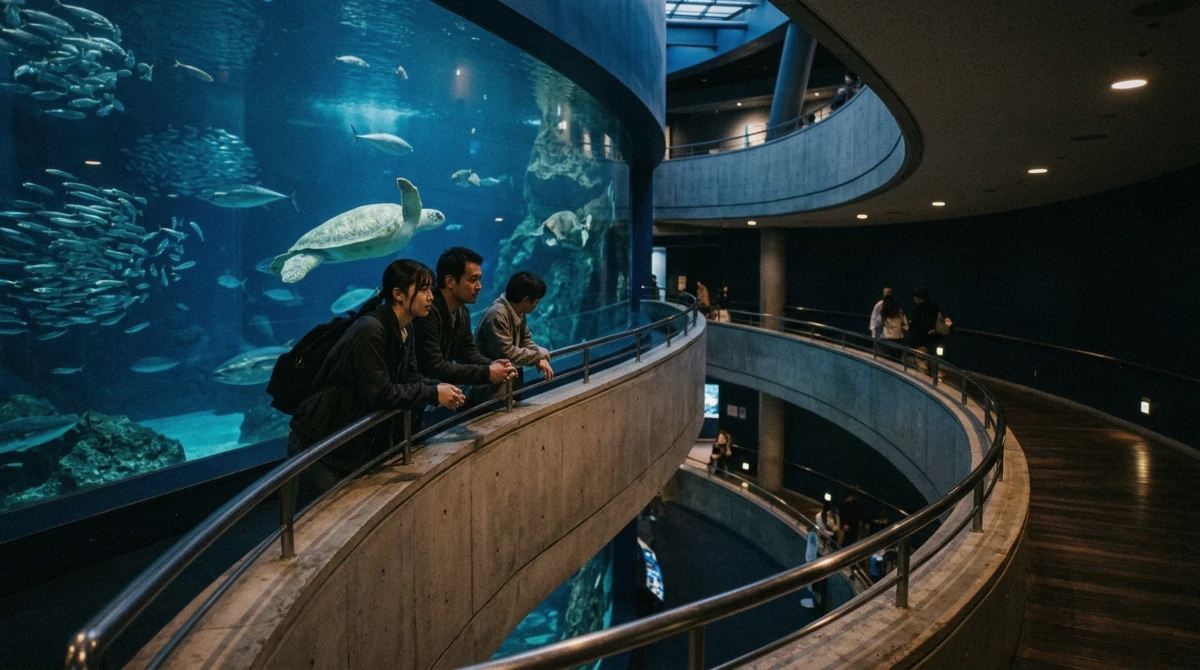
The route itself starts on the 8th floor and spirals down through roughly 15 zones to the ground level, following the Pacific Ocean tank at the center. How long that takes depends almost entirely on who is walking it.
| Visitor type | Typical duration | Why |
|---|---|---|
| Solo or couple, moving briskly | 90 minutes | The full descending route without lingering at any one tank |
| Leisurely pace, photos and reading panels | 2.5 to 3 hours | Time added at each major tank, plus a stop at the gift shop |
| Family with young children | 3 to 4 hours | Extra time at the penguins and the Maldives touch pool, plus stroller pacing and breaks |
| Repeat or enthusiast visitor | 3 hours or more | Waiting for feeding rounds at specific tanks and doubling back through favourite zones |
If you only have a tight window, 90 minutes is genuinely enough to see the full route, including the whale sharks in the main tank. If you have a free afternoon, giving it 3 hours lets you catch at least one feeding round without rushing the rest of the visit.
The route itself is not evenly paced. The upper floors move quickly, since the early zones are smaller tanks meant as a build-up rather than a destination. The middle stretch, where the Pacific Ocean tank comes into view from multiple levels, is where almost everyone slows down regardless of how briskly they started.
Budgeting extra time specifically for that middle section, rather than spreading your total time evenly across the whole route, matches how the building is actually laid out.
Why Mornings Feel So Different From Midday
The gap between a 10:00 arrival and a midday one is not just a vague sense of more people around, it comes from a real, predictable pattern. Group tours and coach arrivals tend to land through the late morning, and school and family groups build through early afternoon once the day is underway elsewhere in Osaka. The first hour after opening sits before both of those patterns kick in, which is the actual mechanism behind why it feels so different, not just good luck.
- First hour after opening: mostly independent visitors, before coach groups arrive
- Late morning to mid-afternoon: coach tours and family groups overlap, the genuine peak
- After 17:00: day-trip visitors have largely departed for dinner or the next stop on their itinerary, leaving a smaller, calmer crowd
Best Time of Day
Two windows stand out clearly from the rest of the day. Right at opening, usually 10:00, the aquarium is at its emptiest, and the first hour gives you a genuinely uncrowded walk down the spiral route before tour groups and families arrive later in the morning. The second window is the evening, after 17:00, when the lighting through the building shifts to a dimmer, more atmospheric mood and the day-trip crowd has largely thinned out.
Osaka Aquarium usually runs 10:00 to 20:00, with last entry at 19:00, one hour before closing. During Golden Week, Obon and other peak periods, opening can shift earlier, to 8:30 or 9:30, so check the official calendar close to your dates rather than assuming the usual 10:00 start.
- Opening hour, around 10:00: the quietest stretch of the whole day
- Late morning to mid-afternoon: the busiest window, especially on weekends and school holidays
- After 17:00: the second quiet window, with a genuinely different evening atmosphere in the lighting
- Last entry is 19:00, one hour before the usual 20:00 closing
Best Day of the Week
Weekdays beat weekends on every measure that matters: crowd size, queue length, and price. Because Osaka Aquarium's admission is date-based, shifting a visit from a Saturday to a Tuesday saves roughly ¥300 per adult on top of shorter lines at the gate and inside the busiest zones. If your schedule allows any flexibility at all, a weekday morning is the single best combination of quiet and cheap available on the calendar.
Monday through Thursday tend to run closest to each other in crowd level, with Friday starting to pick up as the weekend approaches. Sunday is typically the busiest single day of an ordinary, non-holiday week, ahead of Saturday, since it is the last chance for many local visitors before the work week resumes. If you can only choose one weekday, avoiding Friday afternoon and Monday morning school-group blocks nudges the odds further in your favour.
Crowd Calendar: Golden Week, Obon and School Holidays
A handful of named weeks on the 2026 calendar genuinely change the visit, and they are worth planning around rather than discovering at the gate.
| Period | 2026 dates | Crowd level | Our advice |
|---|---|---|---|
| Golden Week | Wednesday, April 29 to Wednesday, May 6 | Peak, especially May 2 to May 6 | Go right at the 10:00 opening or plan an evening visit instead; this window overlaps with the seasonal nemophila flower day trip, so expect the aquarium's afternoon stop to run busier than usual |
| Obon | August 13 to August 16, with peak domestic travel August 8 to August 16 | Very high, one of the busiest stretches of the year | Book a timed e-ticket well ahead and avoid midday entirely |
| Ordinary school holidays and long weekends | Varies through the year | Elevated but manageable | Opening or evening slots still work well |
| Ordinary weekday, outside named holiday weeks | Most of the calendar | Low to moderate | Any time of day is comfortable |
Outside those named weeks, an ordinary weekday stays comfortable at almost any hour. Note that this is an indoor venue, so rainy days actually push crowds up rather than down, since visitors reroute indoor plans toward the aquarium on a wet forecast.
Cruise-ship arrival days at nearby Osaka port can also add a short-lived bump to the crowd, usually concentrated in a single busy window rather than the whole day. If your dates happen to fall inside one of the named peak weeks above and you cannot move them, the two-window rule still holds, opening hour or after 17:00 remain the two calmest stretches even during Golden Week or Obon itself, they are simply calmer relative to a busier baseline rather than genuinely quiet.
Timing Your Visit Around Feeding Rounds
Feeding times shift slightly day to day and are posted on a board at the entrance, but the general pattern runs mid-morning and mid-afternoon across the main tanks, with the whale shark feeding typically around 10:30, penguins fed late morning and mid-afternoon, sea otters mid-morning and mid-afternoon, and the ringed seals around 10:20 and 15:05. If catching a feeding round matters to you, arriving close to opening and checking the day's posted schedule immediately lets you plan the rest of the route around it rather than backtracking later. Treat these times as a guide rather than a promise, since keepers adjust the schedule around the animals' actual needs on any given day.
Our whale shark guide covers the full feeding schedule and what to expect at the main tank in detail.
Best Slot by Traveler Type
If you're visiting solo or as a couple with limited time
go right at 10:00 opening on a weekday, you can walk the full route in 90 minutes with almost no crowd.
If you have young children
budget a full 3 to 4 hours and aim for a weekday morning, since a tired, crowded afternoon is the harder combination for kids.
If you want the evening atmosphere without the daytime crowd
arrive after 17:00, the lighting shifts and the building empties out well before the 19:00 last entry.
If your trip only overlaps with Golden Week or Obon
treat opening hour or the after-17:00 window as close to mandatory, midday during those weeks is the busiest stretch of the whole year.
If you want to catch a feeding round
arrive at opening and check the day's posted schedule immediately, the whale shark feeding typically runs around 10:30.
So, When Should You Go?
A weekday morning at opening is the best all-round slot: the quietest hours of the day, the cheapest date band, and enough time before midday crowds build. The evening window after 17:00 is a close runner-up with its own different atmosphere, worth choosing if mornings do not fit your schedule. The stretch to avoid is midday during Golden Week or Obon, when both the crowds and the calendar price peak at the same time.
If your trip only has one available slot and it happens to fall on a Saturday afternoon in a peak week, do not cancel the plan, just adjust the expectation: budget the fuller 3-to-4-hour pace rather than 90 minutes, and lean on a timed e-ticket booked well ahead so at least the entry itself is not left to chance. Once your slot is picked, our Osaka Aquarium visiting guide compares the entry options and the day tours built around them.
Frequently Asked Questions
Is 90 minutes really enough to see everything at Osaka Aquarium?
Yes, for a solo or brisk-paced couple, 90 minutes covers the full descending route including the whale sharks in the main tank. Families and anyone wanting to catch a feeding round should budget closer to 3 hours.
Is the aquarium quieter in the morning or the evening?
Both are quiet, in different ways. Right at the 10:00 opening is the emptiest stretch of the day, and after 17:00 the crowd thins again with a dimmer, more atmospheric lighting shift.
Which days of the week are busiest at Osaka Aquarium?
Weekends and named holiday weeks like Golden Week and Obon are the busiest. An ordinary weekday, outside those windows, stays comfortable at almost any hour.
When exactly is Golden Week in 2026?
Golden Week 2026 runs Wednesday, April 29 through Wednesday, May 6, with the densest holiday block from May 2 to May 6.
Does visiting on a weekday actually save money, not just crowds?
Yes. Because admission is priced by date, shifting from a Saturday to a Tuesday typically saves roughly ¥300 per adult on top of shorter queues.
Do rainy days make Osaka Aquarium more crowded?
Often, yes. Since it's an entirely indoor venue, a wet forecast tends to push visitors toward it as an indoor alternative, the opposite pattern from an outdoor attraction.
Should I plan my visit around a specific feeding time?
If a feeding round matters to you, arrive at opening and check the schedule posted at the entrance that day, since exact times shift daily. The whale shark feeding typically runs around 10:30, but always confirm the day's board.