What You'll See at Osaka Aquarium: Whale Sharks, Penguins and 620 Species
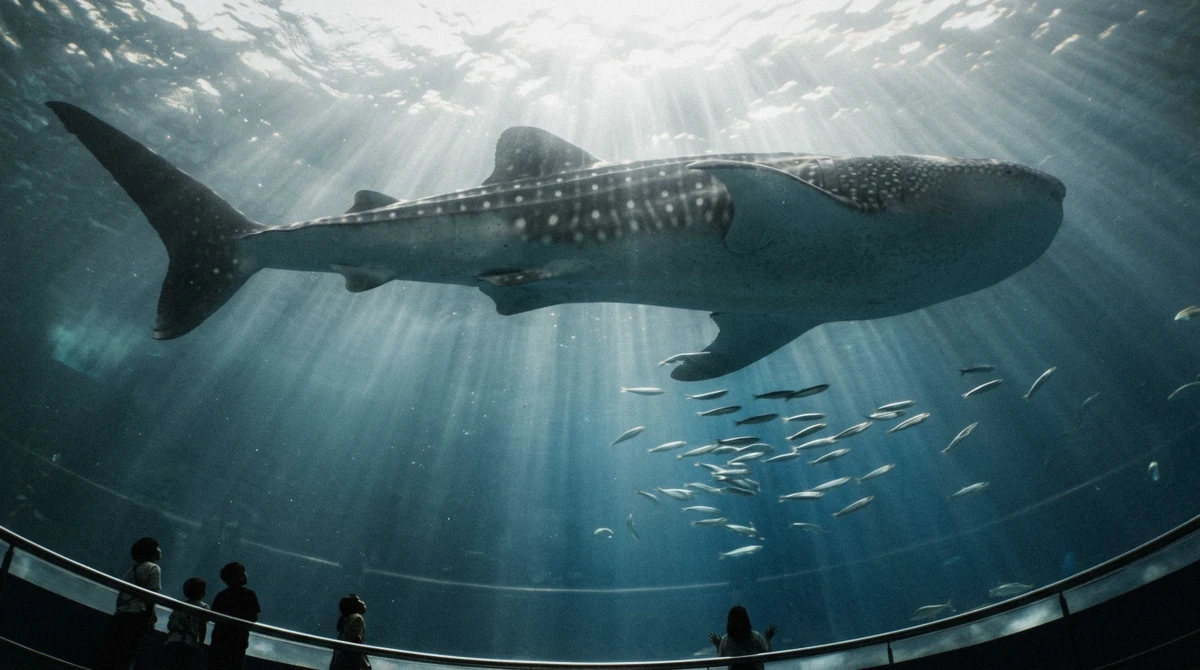
Osaka Aquarium Kaiyukan (海遊館) holds about 620 species and roughly 30,000 creatures, but the two animals most people come for are its resident whale sharks, Kai and Yuu, who live in a 5,400-ton central tank you pass on every floor of the visit. Because they live in the tank rather than passing through open water, you will see them on any visit; the real question worth answering is what else is here, how the building is laid out, and when to time the feeding rounds. We rechecked the layout, the tank specs and the touch pool status, and this guide lays out what's actually inside, floor by floor, plus the couple of things Osaka Aquarium does not have that visitors sometimes expect. Before you go, browse tours that include the aquarium if you'd rather bundle the visit with transport or a skip-the-line ticket.
Quick answer
You'll see the whale sharks Kai and Yuu on any visit to Osaka Aquarium, since they live permanently in the central Pacific Ocean tank rather than passing through. You'll also see sea otters, penguins, sea lions and jellyfish across the building's roughly 620 species, and on a good day you'll catch a feeding round timed to your visit.
Key takeaways
- The whale sharks are always visible: they live in the tank, so this isn't a chance sighting like open-water wildlife
- Kai (male, 5.3 meters) and Yuu (female, 6.2 meters) share the Pacific Ocean tank with rays and schooling fish
- The skip-the-line bundle includes a digital feeding-times guide so you're not guessing at the schedule
- The building is one long descent: escalator to the 8th floor, then down past 15 zones around the central tank
- The Maldives touch pool is open, letting kids gently handle small sharks and rays
- No dolphins performing, no orcas, no polar bears, and no elephants: see what's actually here below
At a Glance: The Signature Animals
The building's headline sights, ordered by how central they are to the visit rather than alphabetically.
| Animal or zone | Floor / area | When to catch it | Kid appeal |
|---|---|---|---|
| Whale sharks (Kai & Yuu) | Pacific Ocean tank, floors 3-8 | Always visible; feeding around 10:30 | High, the main event |
| Sea otters | Aleutian Islands zone | Feeding mid-morning and mid-afternoon | High, very active |
| Penguins (king & gentoo) | Antarctica zone | Feeding late morning and mid-afternoon | High |
| Sea lions & seals | Monterey Bay zone | Anytime, often at the surface | High |
| Ringed seals | Arctic zone | Feeding around 10:20 and 15:05 | High |
| Jellyfish | Jellyfish zone | Anytime, slow-moving display | Medium, calming rather than exciting |
| Maldives touch pool | Interactive zone near the exit route | Anytime during opening hours | High, hands-on |
| Giant spider crabs | Japan Deeps zone | Anytime, low activity | Medium |
The sections below go through the whale sharks, the tank itself, the floor-by-floor route, feeding times, the other headline zones, the touch pool, and what you genuinely won't find here.
The Whale Sharks: Kai and Yuu
Two whale sharks live in the Pacific Ocean tank. Kai is male, measured at 5.3 meters (5 m 30 cm) with a girth of 2.6 meters and a weight around 1,100 kilograms; he's estimated at 8 to 9 years old and arrived at the aquarium. Yuu is female, 6.2 meters, with a girth of 2.7 meters and a weight around 1,800 kilograms, estimated at 18 to 19 years old.
The house naming convention here is simple: males get the name Kai, females get Yuu, so any future arrivals will likely carry the same two names. Because whale sharks in this tank aren't migrating through open water, there's no honest tier system to apply the way there would be for a wild sighting: you will see them, on any visit, at any hour the aquarium is open. What varies is how active they are and how close a feeding round happens to your visit, which is why the feeding schedule below matters more than the sighting itself.
The Pacific Ocean Tank
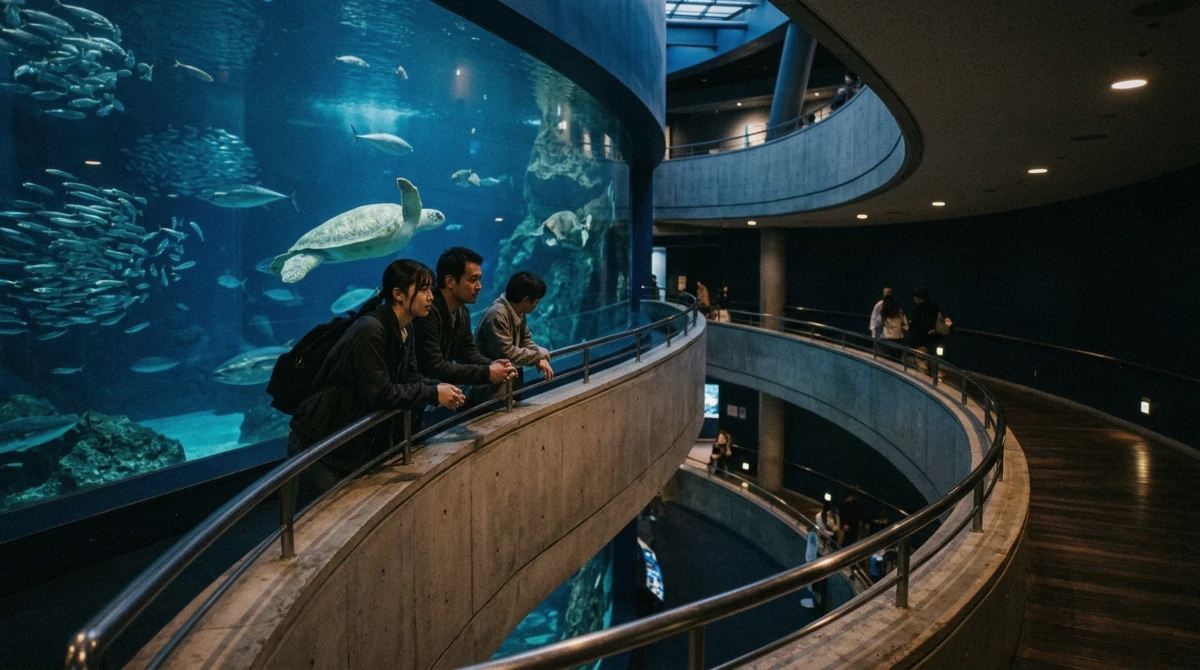
The Pacific Ocean tank is the aquarium's centerpiece, 9 meters deep, about 34 meters long, and holding roughly 5,400 tons of water, more than most aquariums' entire footprint. It sits at the center of the building, and the descending route (below) means you see it repeatedly from different depths and angles as you move down through the floors, rather than viewing it once from a single window.
The whale sharks share the tank with rays and large schooling fish, so even between whale shark sightings there's usually visible motion in the water. Visibility is good throughout, and the deepest viewing windows lower in the building give the most dramatic sense of scale, since you're looking up at animals lit from above.
Floor by Floor: The Descending Route
Osaka Aquarium's layout is unusual and worth understanding before you arrive: a long escalator carries visitors up to the 8th floor first, through the Aqua Gate tunnel tank, and the entire rest of the visit is a spiral descent past themed zones arranged around the central Pacific Ocean tank, so you see the same tank at a different depth on nearly every floor as you go down.
| Stage | Zones | What to look for |
|---|---|---|
| 8th floor (top, via escalator) | Aqua Gate tunnel, Japan Forest | The tunnel tank overhead as you arrive, then otters and river species |
| 7th floor | Aleutian Islands, Monterey Bay | Sea otters and sea lions, often at their most active |
| 6th floor | Gulf of Panama, Ecuador Rainforest | Warmer-water species and a rainforest-style enclosure |
| 5th floor | Antarctica, Arctic | Penguins and ringed seals, both feeding zones |
| 4th floor | Tasman Sea, Great Barrier Reef, Seto Inland Sea | Reef species and Japan's own inland sea life |
| 3rd floor | Coast of Chile, Cook Strait, Japan Deeps | Sea turtles and giant spider crabs, deep-water species |
| 2nd floor | Jellyfish zone, Falkland Islands, Maldives touch pool | The jellyfish display and the hands-on touch pool |
| 1st floor (exit level) | Gift shop and final tank views | Last look at the Pacific Ocean tank from ground level |
There are about 15 themed zones in total, built around a Pacific Rim "ring of fire" concept, so the geography shifts with every floor: Japan Forest, Aleutian Islands, Monterey Bay, Gulf of Panama, Ecuador Rainforest, Antarctica, Tasman Sea, Great Barrier Reef, Seto Inland Sea, Coast of Chile, Cook Strait, Japan Deeps, the jellyfish zone, plus the newer interactive additions: the Arctic zone, the Falkland Islands and the Maldives touch pool.
Feeding Times Worth Planning Around
Exact feeding times vary daily and are posted at the entrance each morning, so treat the times below as the typical pattern rather than a fixed schedule. The skip-the-line bundle includes a digital feeding-times guide, which saves checking the entrance board yourself if timing your visit around a specific feeding matters to you.
| Animal | Typical feeding window |
|---|---|
| Whale sharks | Around 10:30 |
| Ringed seals | Around 10:20 and 15:05 |
| Sea otters | Mid-morning and mid-afternoon |
| Penguins | Late morning and mid-afternoon |
From around 17:00, the lighting through the building dims to an evening mood, the animals settle, and crowds thin noticeably, which is worth knowing if you're choosing between an earlier feeding-focused visit or a quieter, calmer evening one.
Penguins, Otters and the Jellyfish Zone
The Antarctica zone holds both king and gentoo penguins, most active around their two daily feeding windows, and it's consistently one of the most popular stops on the descent for younger visitors. The Aleutian Islands zone's sea otters are similarly reliable for activity, floating on their backs and grooming between feedings.
The jellyfish zone is a change of pace: slow, dimly lit tanks with drifting jellyfish rather than active animals, and it works well as a calmer stretch of the visit if the earlier zones have been high-energy for a young child. The Falkland Islands zone adds rockhopper penguins to the mix, a smaller, more distinctive-looking species than the Antarctica zone's residents.
The Maldives Touch Pool
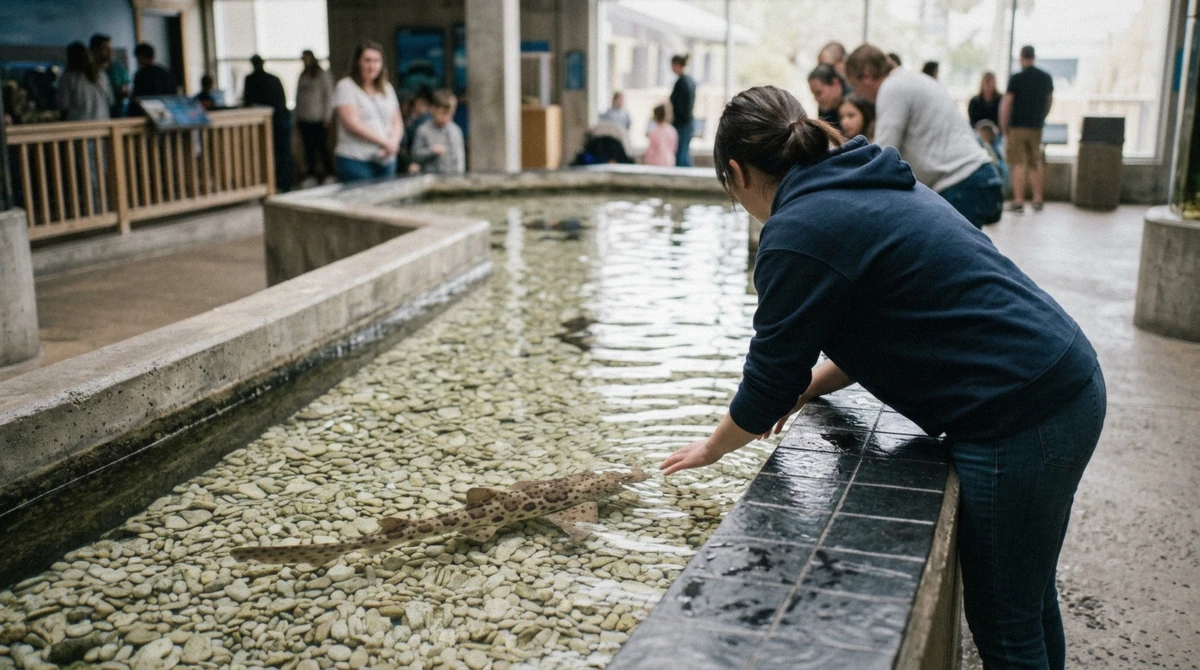
The Maldives touch pool is open, a shallow, open-top pool near the end of the descending route where visitors can gently touch small bamboo sharks, cat sharks and rays under staff supervision. It's a genuine hands-on stop rather than a viewing-only zone, and it's usually a highlight for kids old enough to reach in confidently. Our rainy-day and kids guide covers this pool in more detail if young children are the main audience for your visit.
Staff supervise the pool directly, and the house rule is simple: wash your hands before reaching in and again afterward, using the sinks provided at the pool. Touching is limited to the species in this pool specifically; nothing elsewhere in the building is a touch exhibit.
What You Won't See
A few expectations trip visitors up here, usually borrowed from a different kind of marine park. There are no orcas and no whales in the traditional sense; whale sharks are fish, the largest fish species alive, not marine mammals, despite the name. There are no polar bears anywhere in the building, and dolphin presence is limited to a handful of species in the Tasman Sea zone rather than a dedicated dolphin habitat.
More importantly, this is not a show aquarium: there are no animal performance shows here at all, no dolphin show, no sea lion act, nothing scheduled around an audience and a trainer. Many visitors specifically prefer this, since every animal on the route is doing what it would do anyway rather than performing on cue, but it's worth knowing going in if you're expecting a stadium-style show.
Responsible Viewing
Flash photography is discouraged near the tanks, since a burst of light in low-lit water genuinely startles the animals rather than just annoying other visitors. At the Maldives touch pool, wash your hands before and after, touch gently with an open palm rather than grabbing, and follow the staff on duty if they ask you to pause. Outside the touch pool, every other tank in the building is viewing-only, and tapping the glass to get an animal's attention is discouraged throughout.
How to Maximize What You See
A few habits genuinely change what a visit here produces.
- Check the feeding-times board at the entrance the moment you arrive, and plan your descent loosely around whichever feeding matters most to you.
- Slow down at the Pacific Ocean tank on each floor rather than only stopping once; the whale sharks pass different viewing windows at different times.
- Visit after 17:00 if a calmer, quieter aquarium matters more to you than catching a feeding round, since the crowds thin and the lighting shifts to an evening mood.
- Let kids linger at the Maldives touch pool rather than rushing them through; it's one of the only genuinely interactive stops on the route.
- Bring a phone or camera with a fast shutter for the otters and penguins, both of which move quickly during feeding.
- For a full month-by-month read on crowd levels and the quietest days, our best time to visit guide covers the calendar side of the visit.
Frequently Asked Questions
How many whale sharks live at Osaka Aquarium?
Two: Kai, a 5.3-meter male who arrived in October 2024, and Yuu, a 6.2-meter female. Both live permanently in the central Pacific Ocean tank.
How big is the tank the whale sharks live in?
The Pacific Ocean tank is 9 meters deep, about 34 meters long, and holds roughly 5,400 tons of water. It sits at the center of the building and is visible from multiple floors as you descend.
What time are the whale sharks fed at Osaka Aquarium?
Around 10:30 typically, though exact times vary daily and are posted at the entrance each morning. The skip-the-line bundle's digital feeding-times guide is the easiest way to plan around it without checking the board yourself.
Are there dolphin or sea lion shows at Osaka Aquarium?
No. There are no animal performance shows anywhere in the building, no scheduled dolphin or sea lion act. Every animal on the route behaves naturally rather than on cue, which many visitors prefer.
Can you touch the animals at Osaka Aquarium?
Only at the Maldives touch pool, where small bamboo sharks, cat sharks and rays can be gently touched under staff supervision. Wash your hands before and after. Nothing else in the building is a touch exhibit.
How is the aquarium laid out, floor by floor?
An escalator carries you up to the 8th floor first, then the whole visit spirals down through about 15 themed zones arranged around the central Pacific Ocean tank, so you see the same tank from a different depth on nearly every floor.
Does Osaka Aquarium have polar bears or orcas?
No, neither. There are no polar bears anywhere in the building, and no orcas or whales in the traditional sense; whale sharks are fish, not marine mammals, despite the name.
Whichever floor you start weighing your route from, the whale sharks are the one thing on this page you can't miss, and everything else here, the otters, the penguins, the touch pool, the quiet after 17:00, is what turns a look at a big tank into a couple of hours worth the trip. Pairing the visit with a wider day out, our private guided day is one way to fold the aquarium into a fuller Osaka itinerary rather than treating it as a standalone stop.